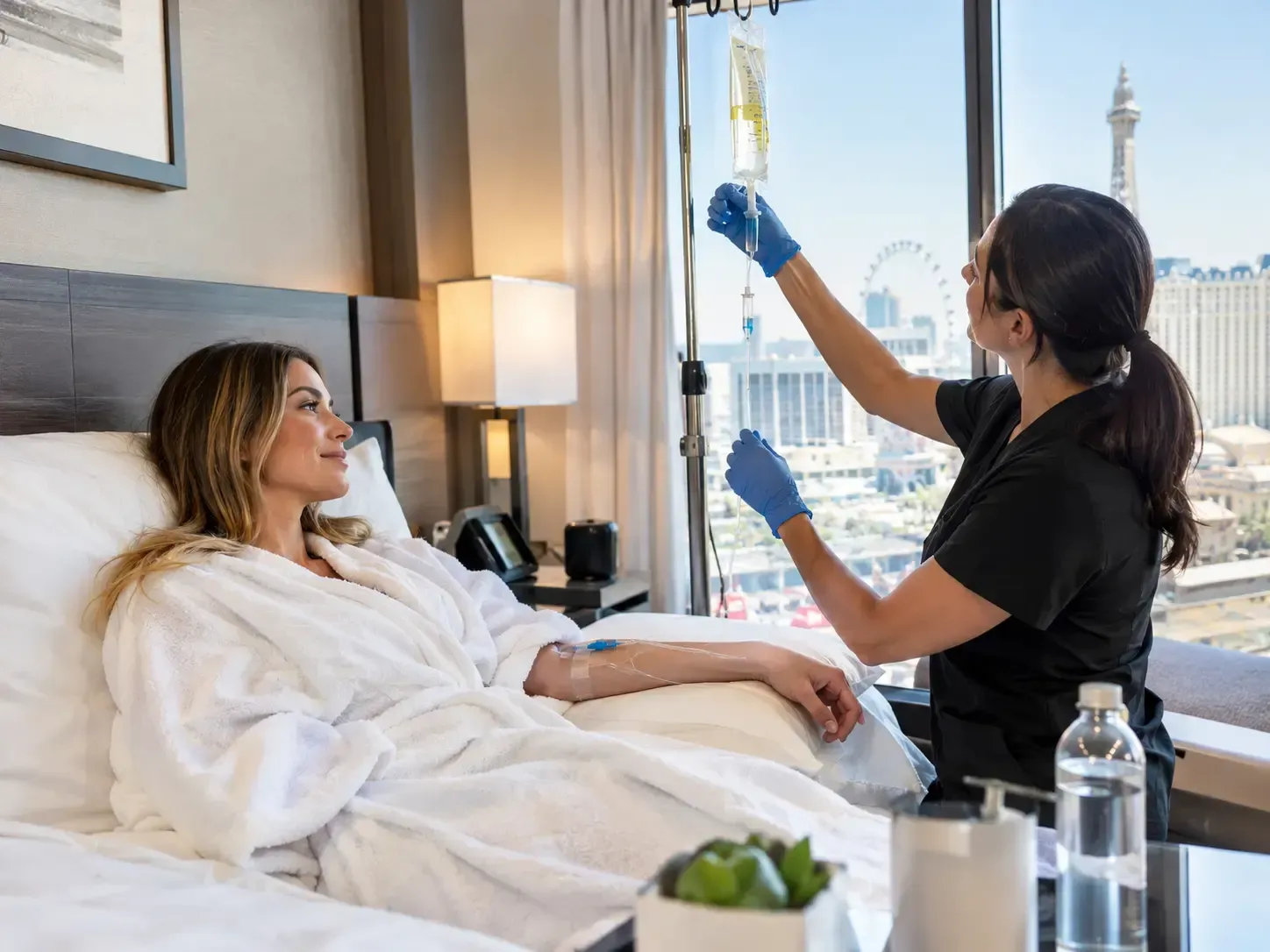
What Happens During the Medical Review Before Mobile IV Therapy?
Before a nurse arrives, clinicians screen your symptoms, history, meds, and vitals so care stays appropriate. That is what happens before a mobile IV treatment with Las Vegas Mobile Hangover IV- IVDRIP2U: a brief medical review that flags red flags, matches a treatment package, and confirms you are a fit for in-home or hotel therapy in Las Vegas, NV.
Key takeaways
- Screening covers symptoms, allergies, medications, and basic vitals before any drip starts.
- Clinicians may delay or decline IV therapy when risk factors outweigh benefit.
- Visitors and residents get the same review standard from the on-call team.
- Cleared guests can book or ask next steps after intake is complete.
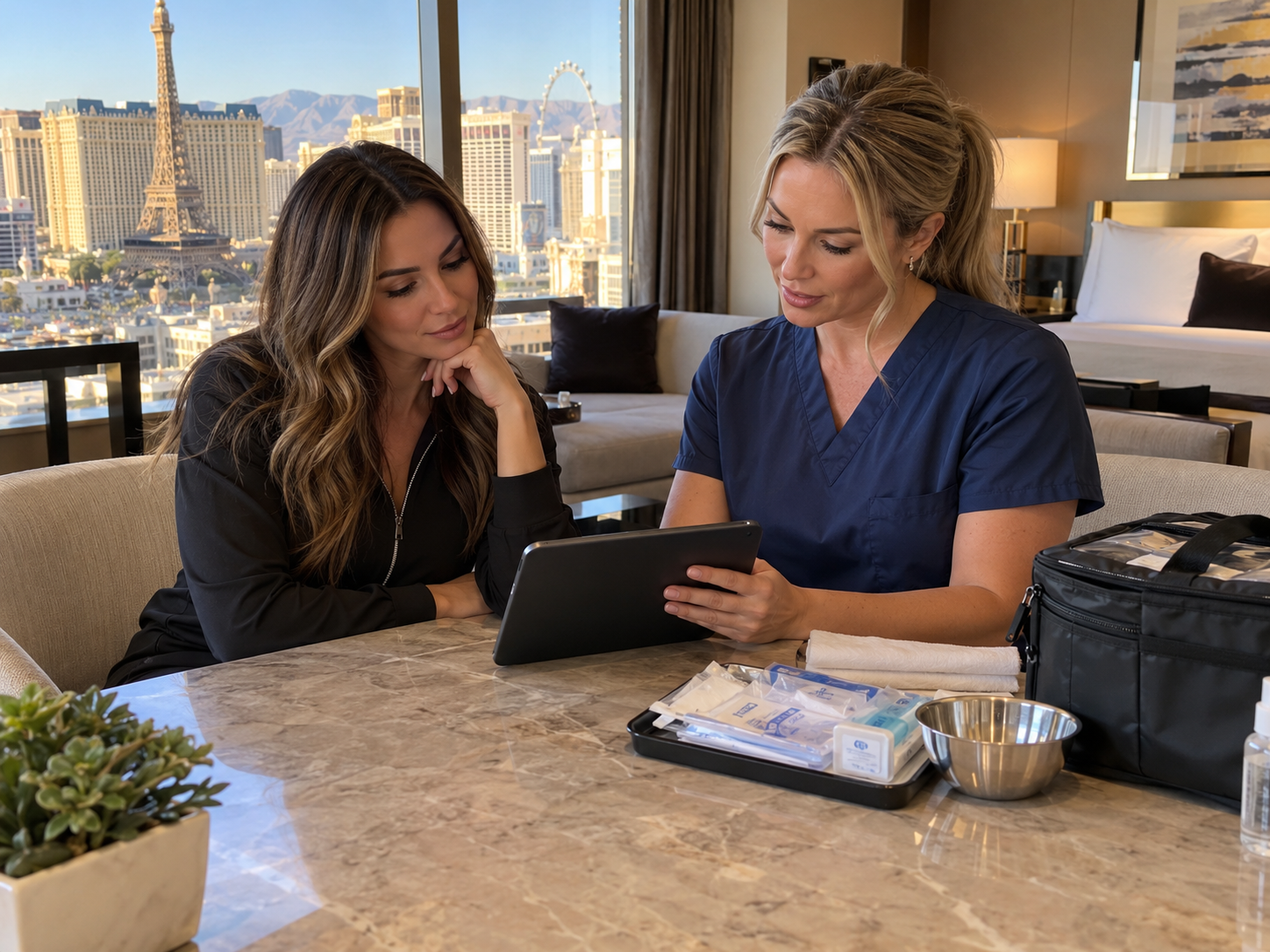
Why is a medical review required before mobile IV therapy?
A medical review is required so trained staff can confirm dehydration or hangover-type needs are suitable for outpatient IV fluids, rule out conditions that need ER care, verify allergies and drug interactions, and document consent—protecting you and keeping mobile service aligned with safe clinical practice in Las Vegas before any catheter is placed.
Which checks happen before a mobile IV treatment versus what may pause care?
Before fluids start, clinicians compare routine screening items—symptoms, history, meds, allergies, and vitals—against red flags that can delay or stop a drip so only appropriate guests receive in-home or hotel therapy; that is what happens before a mobile IV treatment when risk is weighed against benefit for Las Vegas visitors and residents.
| Check or signal | Usually clears path | Watch-out / may pause |
|---|---|---|
| Symptom focus | Mild dehydration, hangover fatigue | Chest pain, severe shortness of breath, confusion |
| Medication list | Stable, disclosed prescriptions | Blood thinners or interaction concerns needing review |
| Allergies / past IVs | No relevant reactions | Prior IV reaction or unknown allergy risk |
| Vitals snapshot | Stable BP, pulse, orientation | Fever, very abnormal vitals, unstable appearance |
Staff document answers, confirm consent, and match you to a suitable plan only after this pass. Unclear or high-risk findings mean referral guidance instead of a catheter on site. Cleared guests move to setup; others get a plain explanation of why the visit stops.

If intake is done and you still need a next step, contact the on-call desk to confirm timing or reschedule after screening.
Which Guests Clear Screening Versus Who Needs Another Path?
Guests who clear what happens before a mobile IV treatment usually show stable vitals, a focused symptom story such as hangover fatigue or mild dehydration, a full medication and allergy list, and no red-flag chest pain, confusion, or breathing trouble, so Las Vegas Mobile Hangover IV- IVDRIP2U can align risk and benefit before any catheter is placed in a home or hotel.
Cleared visitors and residents move from checklist to plan selection. The team’s method stays the same on the Strip or in a neighborhood suite: document answers, confirm consent, then match fluids and additives only after the pass.
Guests who do not clear get a plain stop, not a rushed drip. Unstable vitals, interaction concerns, prior IV reactions, or unclear history trigger pause and referral guidance instead of on-site access.

When the path is clear, staff explain the chosen treatment packages in plain language. Setup follows only after that shared understanding. High-risk findings never become a sales conversation; safety ends the visit early.
Paragraphs stay short so you can scan the difference quickly. Screening is the gate. Benefit without undue risk is the standard for mobile care in Las Vegas.
The medical review ends when both sides share the same picture of risk and benefit. You leave with a clear yes, a clear no, or a short list of what must change before a return visit. Nothing is infused until that picture is stable and documented.
What the clinician documents on site
Clinicians record vitals, medications, allergies, recent intake, and the reason you requested care so the chart matches what happens before a mobile IV treatment. Short notes stay with the visit file. You can ask to hear the summary before consent is signed.
How long the review usually takes
Most hotel and home screens finish in a few focused minutes when history is complete and vitals are steady. Extra time appears only when answers need clarification or a red flag needs a second look. Speed never replaces the checklist.
When referral replaces treatment
Chest pain, confusion, severe breathing trouble, unstable readings, or drug-interaction risk stop the visit. Staff explain the pause in plain terms and point you toward appropriate next care rather than forcing a drip.
| Step | What you provide | What staff confirm |
|---|---|---|
| History | Symptoms, meds, allergies | Completeness and red flags |
| Vitals | Resting measurements | Stability for outpatient IV |
| Consent | Understanding of plan | Shared decision before setup |
Frequently Asked Questions
What happens before a mobile IV treatment in Las Vegas?
A clinician reviews symptoms, medications, allergies, and vital signs, then decides whether fluids and additives are appropriate. Clear history and stable readings allow package selection; red flags stop the visit. This screen protects guests and residents before any catheter is placed at home or in a hotel.
Who performs the medical review for mobile IV therapy?
A trained clinical team member conducts the screen using the same method on the Strip or in residential suites. They document answers, confirm consent, and match care only after clearance. You may ask questions at any point before setup begins.
Can I still get IV therapy if I take prescription medications?
Yes, if the full list is disclosed and no unsafe interaction is found. Hidden or incomplete medication details can delay or cancel treatment. Bring accurate names and doses so the review stays efficient and safe.